Buy norrbottensmedia.eu ?
We are moving the project
norrbottensmedia.eu .
Are you interested in purchasing the domain
norrbottensmedia.eu ?
domain@kv-gmbh.de · 0541-91531010
Buy norrbottensmedia.eu ?
Is Christianity monotheistic?
Yes, Christianity is considered to be a monotheistic religion. It believes in the existence of one God, who is the creator and ruler of the universe. This belief is central to Christian theology and is expressed in the Nicene Creed, which states, "We believe in one God, the Father Almighty, maker of heaven and earth, and of all things visible and invisible." While Christianity acknowledges the existence of other spiritual beings such as angels, it affirms the worship and devotion to only one God. **
How are all three monotheistic religions connected?
All three monotheistic religions - Judaism, Christianity, and Islam - are connected through their belief in one God, who is the creator and ruler of the universe. They also share common religious figures and stories, such as the prophets Abraham and Moses. Additionally, they all have sacred texts that guide their beliefs and practices, with the Hebrew Bible being foundational for Judaism, the Bible for Christianity, and the Quran for Islam. Despite their differences, these shared beliefs and connections have led to interactions and influences between the three religions throughout history. **


Similar search terms for Monotheistic
Top-Angebote
Products related to Monotheistic:
-
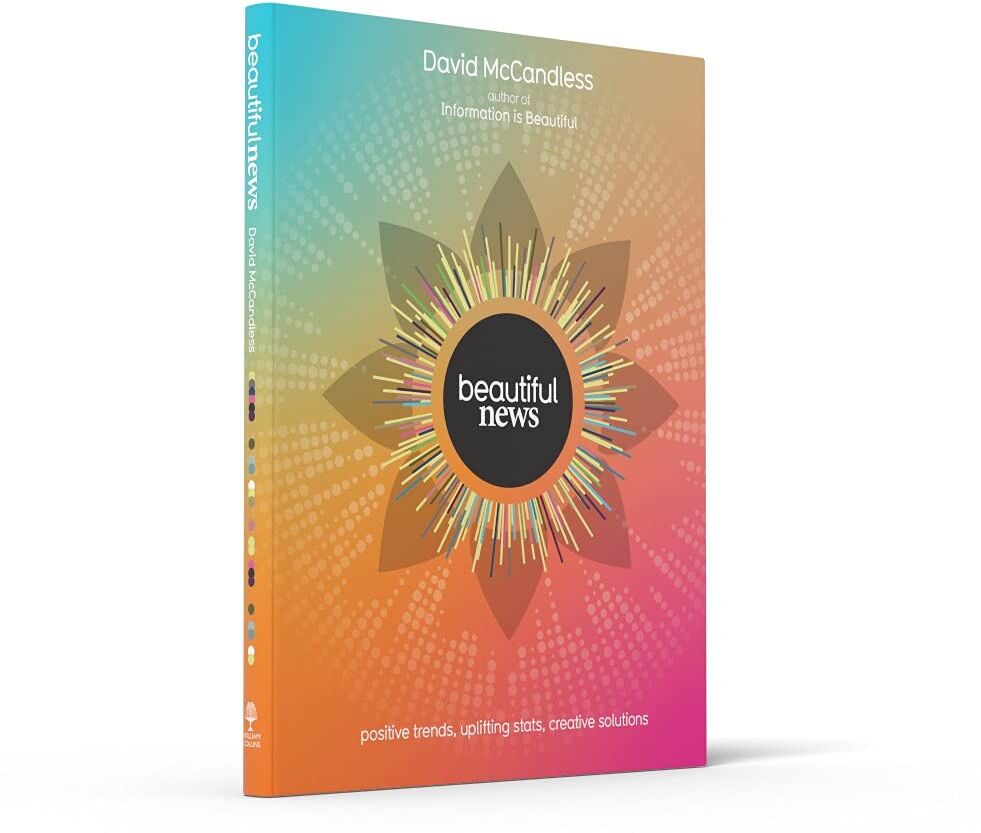
William Collins Beautiful News: Positive Trends, Uplifting Stats, Creative Solutions by David McCandlessIn this fascinating follow-up to the bestselling Information is Beautiful and Knowledge is Beautiful, the king of infographics David McCandless uses spectacular visuals to give us all a bit of good news. We are living in the Information Age, in which we are constantly bombarded with data – on television, in print and online. How can we relate to this mind-numbing overload? Enter David McCandless and his amazing infographics: simple, elegant ways to understand information too complex or abstract to grasp any way but visually. In his unique signature style, he creates dazzling displays that blend facts with their connections, contexts and relationships, making information meaningful, entertaining – and beautiful. In his highly anticipated third book, McCandless illustrates positive news from around the world, for an informative, engaging and uplifting collection of new infographic art.5,99 £*Shipping: 2,99 £Secure redirect to the provider
-
SWISSTEN 22071510 Charger Device, mobile communicationPlug Type: Schuko; Connectors/Plugs: USB type-C, USB; Charge Mode: GaN, PD; Overcharging protection: Yes; Overheating protection: Yes; Short Circuit Protection: Yes; Colour: black; Number of inlets/outlets: 2; Power [W]: 128,29 £*Shipping: 8,45 £Secure redirect to the provider



-
Why is Christianity considered a monotheistic religion?
Christianity is considered a monotheistic religion because it believes in the existence of only one God, who is the creator and ruler of the universe. This belief is central to Christian theology and is expressed in the Nicene Creed, which states that there is "one God, the Father Almighty, maker of heaven and earth, and of all things visible and invisible." While Christianity acknowledges the existence of other spiritual beings such as angels, it maintains that there is only one supreme and all-powerful God. This monotheistic belief is shared with other major monotheistic religions such as Judaism and Islam. **
-
Does Hinduism go deeper than monotheistic religions?
Hinduism is a complex and diverse religion that encompasses a wide range of beliefs, practices, and deities. It does not adhere to a strict monotheistic belief in one supreme deity, but rather acknowledges the existence of multiple gods and goddesses that represent different aspects of the divine. This allows for a deeper exploration of the complexities of the divine and the universe. However, depth in religion is subjective and can be found in various ways across different belief systems. **
-
Are Christianity, Zoroastrianism, Judaism, Islam, etc. truly monotheistic?
Yes, Christianity, Zoroastrianism, Judaism, and Islam are considered monotheistic religions because they all believe in the existence of one supreme deity. In Christianity, there is belief in the Holy Trinity, but ultimately, there is one God. Zoroastrianism worships Ahura Mazda as the supreme deity, Judaism believes in one God, Islam worships Allah as the one true God. Despite variations in beliefs and practices, the core principle of monotheism is central to these religions. **
-
What is the message of the monotheistic religion?
The message of monotheistic religions, such as Christianity, Islam, and Judaism, is the belief in one God. This belief emphasizes the importance of worshiping and obeying this one God, and living a righteous and moral life according to the teachings and commandments of that God. Monotheistic religions also often emphasize the idea of a personal relationship with God, and the hope for salvation or eternal life through faith and good deeds. Overall, the message of monotheistic religions is to live a life of faith, obedience, and moral righteousness in devotion to the one true God. **


Why have the monotheistic religions established themselves worldwide?
The monotheistic religions, such as Christianity, Islam, and Judaism, have established themselves worldwide due to several factors. Firstly, these religions have strong missionary traditions, actively seeking to spread their beliefs to new regions and convert new followers. Additionally, the monotheistic religions often have powerful and influential institutions, such as churches and mosques, which have helped to promote and maintain their presence globally. Furthermore, the monotheistic religions offer a sense of community, moral guidance, and a connection to a higher power, which has resonated with people across different cultures and societies, contributing to their widespread establishment. **
Why are there three different monotheistic world religions?
There are three different monotheistic world religions - Judaism, Christianity, and Islam - because they each emerged in different historical and cultural contexts, and each has its own unique beliefs, practices, and scriptures. Judaism is the oldest of the three, and Christianity and Islam both emerged later, building upon and adapting some of the beliefs and traditions of Judaism. Over time, these religions developed distinct theological and doctrinal differences, leading to the formation of three separate monotheistic faith traditions. Additionally, the spread of these religions was influenced by historical events, conquests, and migrations, leading to their presence in different regions of the world. **
Top-Angebote
Products related to Monotheistic:
-
Juggernaut Publication Do Epic Shit by Ankur WarikooAnkur Warikoo is an entrepreneur and content creator whose deep, witty and brutally honest thoughts on success and failure, money and investing, self-awareness and personal relationships have made him one of India’s top personal brands. In his first book, Ankur puts together the key ideas that have fuelled his journey – one that began with him wanting to be a space engineer and ended with him creating content that has been seen and read by millions. His thoughts range from the importance of creating habits for long-term success to the foundations of money management, from embracing and accepting failure to the real truth about learning empathy. This is a book to be read, and reread, a book whose lines you will underline and think about again and again, a book you will give your family and friends and strangers. Ankur hopes for this book to become the most gifted book ever!9,99 £*Shipping: 2,99 £Secure redirect to the provider
-
Juggernaut Publication Get Epic Shit Done by Ankur WarikooDO EPIC SHIT made you think. GET EPIC SHIT DONE will make you act! When he was a college student, Ankur bought a book containing answers to the last 10 years’ question papers. That book helped him prepare for the forthcoming exams. In his second book, he attempts to create the same book for life. Written as a conversation between a student and a teacher, GET EPIC SHIT DONE answers 36 life questions that you face almost everyday, questions that you need answers to. GET EPIC SHIT DONE isn’t just a book that will inspire you – it will visibly improve the way you live.13,99 £*Shipping: 2,99 £Secure redirect to the provider
-
William Collins Beautiful News: Positive Trends, Uplifting Stats, Creative Solutions by David McCandlessIn this fascinating follow-up to the bestselling Information is Beautiful and Knowledge is Beautiful, the king of infographics David McCandless uses spectacular visuals to give us all a bit of good news. We are living in the Information Age, in which we are constantly bombarded with data – on television, in print and online. How can we relate to this mind-numbing overload? Enter David McCandless and his amazing infographics: simple, elegant ways to understand information too complex or abstract to grasp any way but visually. In his unique signature style, he creates dazzling displays that blend facts with their connections, contexts and relationships, making information meaningful, entertaining – and beautiful. In his highly anticipated third book, McCandless illustrates positive news from around the world, for an informative, engaging and uplifting collection of new infographic art.5,99 £*Shipping: 2,99 £Secure redirect to the provider
-
Is Christianity monotheistic?
Yes, Christianity is considered to be a monotheistic religion. It believes in the existence of one God, who is the creator and ruler of the universe. This belief is central to Christian theology and is expressed in the Nicene Creed, which states, "We believe in one God, the Father Almighty, maker of heaven and earth, and of all things visible and invisible." While Christianity acknowledges the existence of other spiritual beings such as angels, it affirms the worship and devotion to only one God. **
-
How are all three monotheistic religions connected?
All three monotheistic religions - Judaism, Christianity, and Islam - are connected through their belief in one God, who is the creator and ruler of the universe. They also share common religious figures and stories, such as the prophets Abraham and Moses. Additionally, they all have sacred texts that guide their beliefs and practices, with the Hebrew Bible being foundational for Judaism, the Bible for Christianity, and the Quran for Islam. Despite their differences, these shared beliefs and connections have led to interactions and influences between the three religions throughout history. **
-
Why is Christianity considered a monotheistic religion?
Christianity is considered a monotheistic religion because it believes in the existence of only one God, who is the creator and ruler of the universe. This belief is central to Christian theology and is expressed in the Nicene Creed, which states that there is "one God, the Father Almighty, maker of heaven and earth, and of all things visible and invisible." While Christianity acknowledges the existence of other spiritual beings such as angels, it maintains that there is only one supreme and all-powerful God. This monotheistic belief is shared with other major monotheistic religions such as Judaism and Islam. **
-
Does Hinduism go deeper than monotheistic religions?
Hinduism is a complex and diverse religion that encompasses a wide range of beliefs, practices, and deities. It does not adhere to a strict monotheistic belief in one supreme deity, but rather acknowledges the existence of multiple gods and goddesses that represent different aspects of the divine. This allows for a deeper exploration of the complexities of the divine and the universe. However, depth in religion is subjective and can be found in various ways across different belief systems. **
Similar search terms for Monotheistic
-
SWISSTEN 22071510 Charger Device, mobile communicationPlug Type: Schuko; Connectors/Plugs: USB type-C, USB; Charge Mode: GaN, PD; Overcharging protection: Yes; Overheating protection: Yes; Short Circuit Protection: Yes; Colour: black; Number of inlets/outlets: 2; Power [W]: 128,29 £*Shipping: 8,45 £Secure redirect to the provider
-
Sceptre Stop Reading the News: A Manifesto for a Happier, Calmer and Wiser Life by Rolf DobelliIn 2013 Rolf Dobelli stood in front of a roomful of journalists and proclaimed that he did not read the news. It caused a riot. Now the author of the bestselling The Art of Thinking Clearly finally sets down his philosophy in detail. And he practises what he preaches: he hasn't read the news for a decade. Stop Reading the News is Dobelli's manifesto about the dangers of the most toxic form of information - news. He shows the damage it does to our concentration and well-being, and how a misplaced sense of duty can misdirect our behaviour. Most importantly, he offers the reader the guidance on how to live without news, and the many potential gains to be had: less disruption, more time, less anxiety, more insights. In a world of increasing disruption and division, Stop Reading the News is a welcome voice of calm and wisdom.4,49 £*Shipping: 1,99 £Secure redirect to the provider
-
Are Christianity, Zoroastrianism, Judaism, Islam, etc. truly monotheistic?
Yes, Christianity, Zoroastrianism, Judaism, and Islam are considered monotheistic religions because they all believe in the existence of one supreme deity. In Christianity, there is belief in the Holy Trinity, but ultimately, there is one God. Zoroastrianism worships Ahura Mazda as the supreme deity, Judaism believes in one God, Islam worships Allah as the one true God. Despite variations in beliefs and practices, the core principle of monotheism is central to these religions. **
-
What is the message of the monotheistic religion?
The message of monotheistic religions, such as Christianity, Islam, and Judaism, is the belief in one God. This belief emphasizes the importance of worshiping and obeying this one God, and living a righteous and moral life according to the teachings and commandments of that God. Monotheistic religions also often emphasize the idea of a personal relationship with God, and the hope for salvation or eternal life through faith and good deeds. Overall, the message of monotheistic religions is to live a life of faith, obedience, and moral righteousness in devotion to the one true God. **
-
Why have the monotheistic religions established themselves worldwide?
The monotheistic religions, such as Christianity, Islam, and Judaism, have established themselves worldwide due to several factors. Firstly, these religions have strong missionary traditions, actively seeking to spread their beliefs to new regions and convert new followers. Additionally, the monotheistic religions often have powerful and influential institutions, such as churches and mosques, which have helped to promote and maintain their presence globally. Furthermore, the monotheistic religions offer a sense of community, moral guidance, and a connection to a higher power, which has resonated with people across different cultures and societies, contributing to their widespread establishment. **
-
Why are there three different monotheistic world religions?
There are three different monotheistic world religions - Judaism, Christianity, and Islam - because they each emerged in different historical and cultural contexts, and each has its own unique beliefs, practices, and scriptures. Judaism is the oldest of the three, and Christianity and Islam both emerged later, building upon and adapting some of the beliefs and traditions of Judaism. Over time, these religions developed distinct theological and doctrinal differences, leading to the formation of three separate monotheistic faith traditions. Additionally, the spread of these religions was influenced by historical events, conquests, and migrations, leading to their presence in different regions of the world. **
* All prices are inclusive of VAT and, if applicable, plus shipping costs. The offer information is based on the details provided by the respective shop and is updated through automated processes. Real-time updates do not occur, so deviations can occur in individual cases. ** Note: Parts of this content were created by AI.