Buy norrbottensmedia.eu ?
We are moving the project
norrbottensmedia.eu .
Are you interested in purchasing the domain
norrbottensmedia.eu ?
domain@kv-gmbh.de · 0541-91531010
Buy norrbottensmedia.eu ?
What is a downbeat in music?
A downbeat in music refers to the first beat of a measure in a piece of music. It is the strongest and most emphasized beat in the measure, often providing a sense of stability and grounding for the music. The downbeat is typically where the main rhythm and pulse of the music is established, and it is crucial for maintaining the overall structure and timing of the piece. In notation, the downbeat is often indicated by a downward-pointing arrow or a vertical line. **
How do you determine the upbeat or downbeat?
The upbeat and downbeat in music are determined by the rhythmic emphasis placed on certain beats within a measure. The downbeat is typically the first beat of a measure and is often emphasized with a stronger accent or feeling of stability. The upbeat, on the other hand, is the offbeat or the weaker part of the measure, often creating a sense of anticipation or movement. In most Western music, the downbeat is where the listener feels the strongest sense of pulse and stability, while the upbeat creates a sense of rhythmic momentum and drive. **


Similar search terms for Downbeat
Top-Angebote
Products related to Downbeat:
-
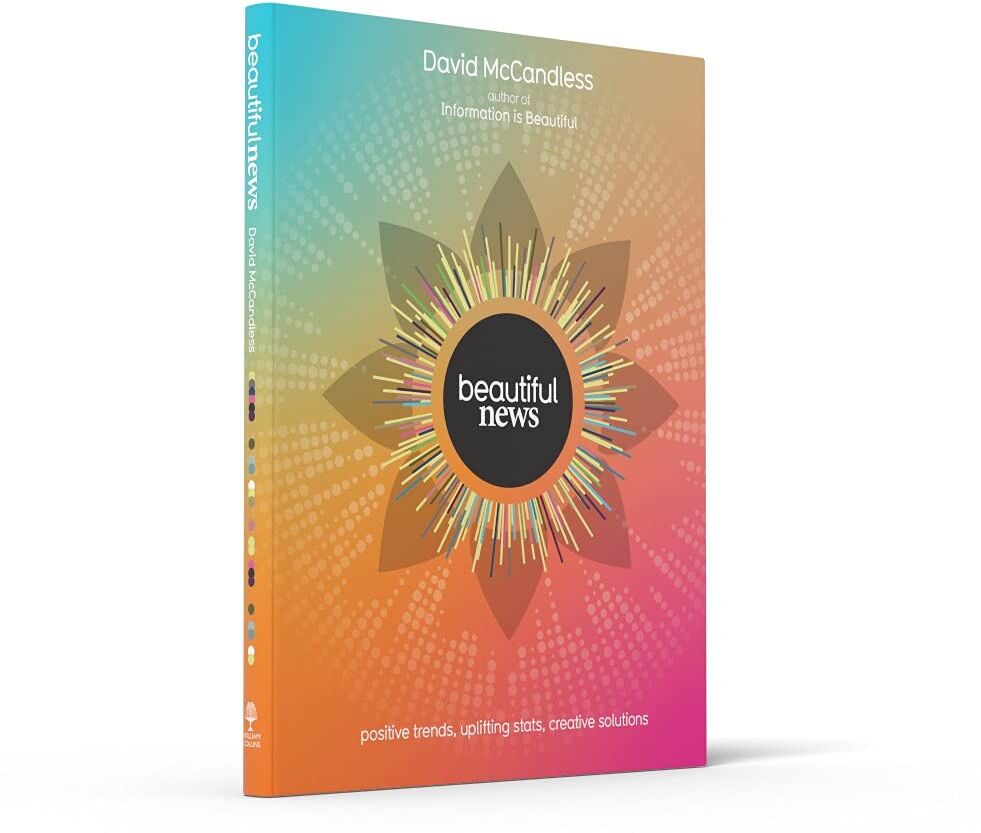
William Collins Beautiful News: Positive Trends, Uplifting Stats, Creative Solutions by David McCandlessIn this fascinating follow-up to the bestselling Information is Beautiful and Knowledge is Beautiful, the king of infographics David McCandless uses spectacular visuals to give us all a bit of good news. We are living in the Information Age, in which we are constantly bombarded with data – on television, in print and online. How can we relate to this mind-numbing overload? Enter David McCandless and his amazing infographics: simple, elegant ways to understand information too complex or abstract to grasp any way but visually. In his unique signature style, he creates dazzling displays that blend facts with their connections, contexts and relationships, making information meaningful, entertaining – and beautiful. In his highly anticipated third book, McCandless illustrates positive news from around the world, for an informative, engaging and uplifting collection of new infographic art.5,99 £*Shipping: 2,99 £Secure redirect to the provider
-
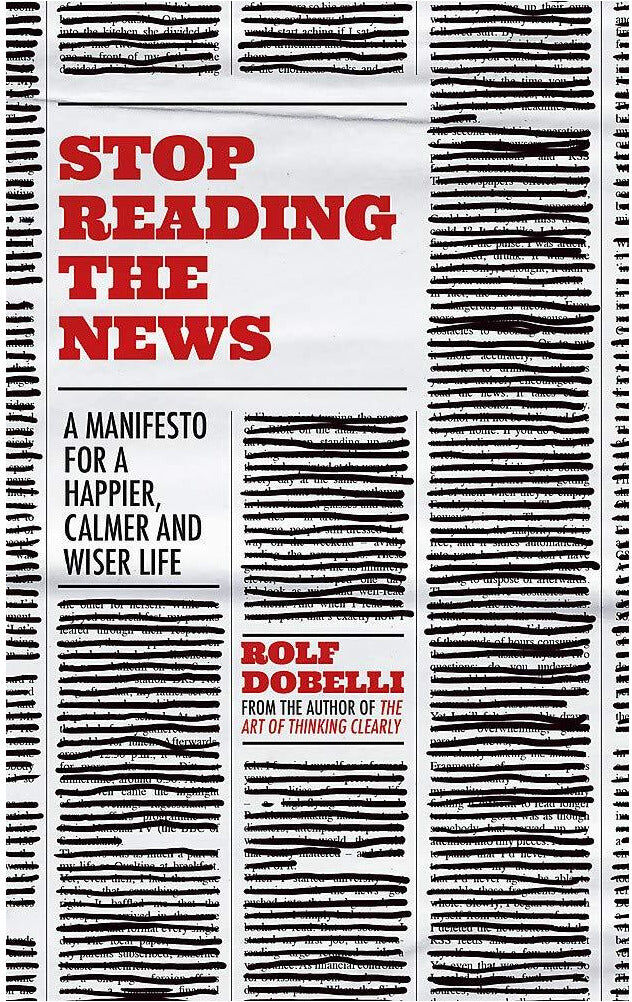
Sceptre Stop Reading the News: A Manifesto for a Happier, Calmer and Wiser Life by Rolf DobelliIn 2013 Rolf Dobelli stood in front of a roomful of journalists and proclaimed that he did not read the news. It caused a riot. Now the author of the bestselling The Art of Thinking Clearly finally sets down his philosophy in detail. And he practises what he preaches: he hasn't read the news for a decade. Stop Reading the News is Dobelli's manifesto about the dangers of the most toxic form of information - news. He shows the damage it does to our concentration and well-being, and how a misplaced sense of duty can misdirect our behaviour. Most importantly, he offers the reader the guidance on how to live without news, and the many potential gains to be had: less disruption, more time, less anxiety, more insights. In a world of increasing disruption and division, Stop Reading the News is a welcome voice of calm and wisdom.4,49 £*Shipping: 1,99 £Secure redirect to the provider


-
How do you determine the up or downbeat?
The upbeat is typically determined by listening for the weaker or off-beat in a musical phrase. It is often the note or beat that comes before the downbeat, creating a sense of anticipation or leading into the stronger downbeat. In music notation, the upbeat is usually indicated by a symbol like an eighth note or a rest before the downbeat. Additionally, the rhythmic emphasis and accents in the music can also help determine the up or downbeat. **
-
What is an upbeat and what is a downbeat?
In music, an upbeat refers to the weak or unaccented pulse that occurs before the downbeat. It is often the last beat of a measure or the off-beat. In contrast, a downbeat is the strong or accented pulse that marks the beginning of a measure. It is typically the first beat of a measure and helps establish the rhythm and structure of a musical piece. **
-
How do I recognize the upbeat or the downbeat?
In music, the downbeat is typically the first beat of a measure and is often emphasized in a piece of music. It is usually where you would tap your foot or clap your hands to keep time. The upbeat, on the other hand, is the offbeat or the weaker part of the measure that falls between the downbeats. To recognize the upbeat and downbeat in a piece of music, you can listen for where the strongest emphasis or pulse occurs, which is usually the downbeat, and then notice the weaker beats that fall in between, which are the upbeats. **
-
How can one determine the key signature based on the pickup or the downbeat?
To determine the key signature based on the pickup or the downbeat, one can listen to the tonal center of the music and identify the pitch that feels like the "home" note. If the pickup or downbeat emphasizes a particular note, that note is likely the tonic of the key. Additionally, one can listen for any recurring melodic or harmonic patterns that may indicate the key signature. By paying attention to the overall tonal center and the patterns in the music, one can determine the key signature based on the pickup or the downbeat. **


What can one study in the field of fashion journalism and media communication at AMD?
At AMD, one can study a range of topics in the field of fashion journalism and media communication. This may include courses on fashion writing, editorial styling, digital media, visual communication, trend forecasting, and fashion marketing. Students may also learn about the history and theory of fashion, as well as the role of media in shaping and communicating fashion trends. Additionally, they may have the opportunity to gain practical experience through internships and industry collaborations. Overall, the program at AMD provides a comprehensive education in both the creative and business aspects of fashion journalism and media communication. **
What is the difference between communication studies and journalism?
Communication studies is a broader field that focuses on the theories and practices of human communication, including interpersonal, organizational, and mass communication. It examines the role of communication in shaping society and culture. On the other hand, journalism is a specific discipline within communication studies that focuses on gathering, analyzing, and presenting news and information to the public. Journalism often involves reporting, writing, and editing news stories for various media platforms, such as newspapers, magazines, television, and online outlets. While communication studies encompasses a wide range of communication processes and contexts, journalism is more focused on the production and dissemination of news and information. **
Top-Angebote
Products related to Downbeat:
-
Juggernaut Publication Do Epic Shit by Ankur WarikooAnkur Warikoo is an entrepreneur and content creator whose deep, witty and brutally honest thoughts on success and failure, money and investing, self-awareness and personal relationships have made him one of India’s top personal brands. In his first book, Ankur puts together the key ideas that have fuelled his journey – one that began with him wanting to be a space engineer and ended with him creating content that has been seen and read by millions. His thoughts range from the importance of creating habits for long-term success to the foundations of money management, from embracing and accepting failure to the real truth about learning empathy. This is a book to be read, and reread, a book whose lines you will underline and think about again and again, a book you will give your family and friends and strangers. Ankur hopes for this book to become the most gifted book ever!9,99 £*Shipping: 2,99 £Secure redirect to the provider
-
Juggernaut Publication Get Epic Shit Done by Ankur WarikooDO EPIC SHIT made you think. GET EPIC SHIT DONE will make you act! When he was a college student, Ankur bought a book containing answers to the last 10 years’ question papers. That book helped him prepare for the forthcoming exams. In his second book, he attempts to create the same book for life. Written as a conversation between a student and a teacher, GET EPIC SHIT DONE answers 36 life questions that you face almost everyday, questions that you need answers to. GET EPIC SHIT DONE isn’t just a book that will inspire you – it will visibly improve the way you live.13,99 £*Shipping: 2,99 £Secure redirect to the provider
-
William Collins Beautiful News: Positive Trends, Uplifting Stats, Creative Solutions by David McCandlessIn this fascinating follow-up to the bestselling Information is Beautiful and Knowledge is Beautiful, the king of infographics David McCandless uses spectacular visuals to give us all a bit of good news. We are living in the Information Age, in which we are constantly bombarded with data – on television, in print and online. How can we relate to this mind-numbing overload? Enter David McCandless and his amazing infographics: simple, elegant ways to understand information too complex or abstract to grasp any way but visually. In his unique signature style, he creates dazzling displays that blend facts with their connections, contexts and relationships, making information meaningful, entertaining – and beautiful. In his highly anticipated third book, McCandless illustrates positive news from around the world, for an informative, engaging and uplifting collection of new infographic art.5,99 £*Shipping: 2,99 £Secure redirect to the provider
-
Sceptre Stop Reading the News: A Manifesto for a Happier, Calmer and Wiser Life by Rolf DobelliIn 2013 Rolf Dobelli stood in front of a roomful of journalists and proclaimed that he did not read the news. It caused a riot. Now the author of the bestselling The Art of Thinking Clearly finally sets down his philosophy in detail. And he practises what he preaches: he hasn't read the news for a decade. Stop Reading the News is Dobelli's manifesto about the dangers of the most toxic form of information - news. He shows the damage it does to our concentration and well-being, and how a misplaced sense of duty can misdirect our behaviour. Most importantly, he offers the reader the guidance on how to live without news, and the many potential gains to be had: less disruption, more time, less anxiety, more insights. In a world of increasing disruption and division, Stop Reading the News is a welcome voice of calm and wisdom.4,49 £*Shipping: 1,99 £Secure redirect to the provider
-
What is a downbeat in music?
A downbeat in music refers to the first beat of a measure in a piece of music. It is the strongest and most emphasized beat in the measure, often providing a sense of stability and grounding for the music. The downbeat is typically where the main rhythm and pulse of the music is established, and it is crucial for maintaining the overall structure and timing of the piece. In notation, the downbeat is often indicated by a downward-pointing arrow or a vertical line. **
-
How do you determine the upbeat or downbeat?
The upbeat and downbeat in music are determined by the rhythmic emphasis placed on certain beats within a measure. The downbeat is typically the first beat of a measure and is often emphasized with a stronger accent or feeling of stability. The upbeat, on the other hand, is the offbeat or the weaker part of the measure, often creating a sense of anticipation or movement. In most Western music, the downbeat is where the listener feels the strongest sense of pulse and stability, while the upbeat creates a sense of rhythmic momentum and drive. **
-
How do you determine the up or downbeat?
The upbeat is typically determined by listening for the weaker or off-beat in a musical phrase. It is often the note or beat that comes before the downbeat, creating a sense of anticipation or leading into the stronger downbeat. In music notation, the upbeat is usually indicated by a symbol like an eighth note or a rest before the downbeat. Additionally, the rhythmic emphasis and accents in the music can also help determine the up or downbeat. **
-
What is an upbeat and what is a downbeat?
In music, an upbeat refers to the weak or unaccented pulse that occurs before the downbeat. It is often the last beat of a measure or the off-beat. In contrast, a downbeat is the strong or accented pulse that marks the beginning of a measure. It is typically the first beat of a measure and helps establish the rhythm and structure of a musical piece. **
Similar search terms for Downbeat
-
SWISSTEN 22071510 Charger Device, mobile communicationPlug Type: Schuko; Connectors/Plugs: USB type-C, USB; Charge Mode: GaN, PD; Overcharging protection: Yes; Overheating protection: Yes; Short Circuit Protection: Yes; Colour: black; Number of inlets/outlets: 2; Power [W]: 128,29 £*Shipping: 8,45 £Secure redirect to the provider
-
How do I recognize the upbeat or the downbeat?
In music, the downbeat is typically the first beat of a measure and is often emphasized in a piece of music. It is usually where you would tap your foot or clap your hands to keep time. The upbeat, on the other hand, is the offbeat or the weaker part of the measure that falls between the downbeats. To recognize the upbeat and downbeat in a piece of music, you can listen for where the strongest emphasis or pulse occurs, which is usually the downbeat, and then notice the weaker beats that fall in between, which are the upbeats. **
-
How can one determine the key signature based on the pickup or the downbeat?
To determine the key signature based on the pickup or the downbeat, one can listen to the tonal center of the music and identify the pitch that feels like the "home" note. If the pickup or downbeat emphasizes a particular note, that note is likely the tonic of the key. Additionally, one can listen for any recurring melodic or harmonic patterns that may indicate the key signature. By paying attention to the overall tonal center and the patterns in the music, one can determine the key signature based on the pickup or the downbeat. **
-
What can one study in the field of fashion journalism and media communication at AMD?
At AMD, one can study a range of topics in the field of fashion journalism and media communication. This may include courses on fashion writing, editorial styling, digital media, visual communication, trend forecasting, and fashion marketing. Students may also learn about the history and theory of fashion, as well as the role of media in shaping and communicating fashion trends. Additionally, they may have the opportunity to gain practical experience through internships and industry collaborations. Overall, the program at AMD provides a comprehensive education in both the creative and business aspects of fashion journalism and media communication. **
-
What is the difference between communication studies and journalism?
Communication studies is a broader field that focuses on the theories and practices of human communication, including interpersonal, organizational, and mass communication. It examines the role of communication in shaping society and culture. On the other hand, journalism is a specific discipline within communication studies that focuses on gathering, analyzing, and presenting news and information to the public. Journalism often involves reporting, writing, and editing news stories for various media platforms, such as newspapers, magazines, television, and online outlets. While communication studies encompasses a wide range of communication processes and contexts, journalism is more focused on the production and dissemination of news and information. **
* All prices are inclusive of VAT and, if applicable, plus shipping costs. The offer information is based on the details provided by the respective shop and is updated through automated processes. Real-time updates do not occur, so deviations can occur in individual cases. ** Note: Parts of this content were created by AI.