Buy norrbottensmedia.eu ?
We are moving the project
norrbottensmedia.eu .
Are you interested in purchasing the domain
norrbottensmedia.eu ?
domain@kv-gmbh.de · 0541-91531010
Buy norrbottensmedia.eu ?
Cation or anion?
A cation is a positively charged ion, while an anion is a negatively charged ion. Cations are formed when an atom loses electrons, resulting in a net positive charge, while anions are formed when an atom gains electrons, resulting in a net negative charge. The charge of a cation is indicated by a superscript plus sign (+), while the charge of an anion is indicated by a superscript minus sign (-). **
Which anion is formed?
The anion formed is chloride (Cl-). When sodium chloride (NaCl) dissolves in water, it dissociates into sodium cations (Na+) and chloride anions (Cl-). The chloride anion carries a negative charge and is attracted to the positive end of the water molecule, forming a hydrated chloride ion. **


Similar search terms for Anion
Top-Angebote
Products related to Anion:
-
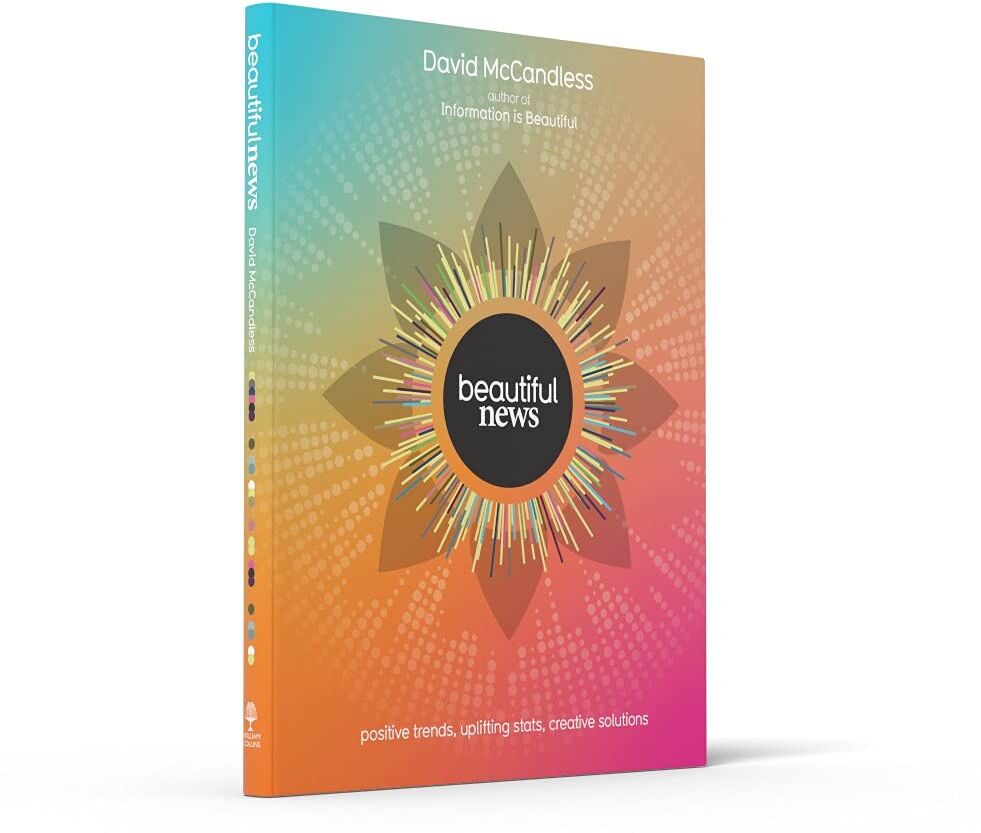
William Collins Beautiful News: Positive Trends, Uplifting Stats, Creative Solutions by David McCandlessIn this fascinating follow-up to the bestselling Information is Beautiful and Knowledge is Beautiful, the king of infographics David McCandless uses spectacular visuals to give us all a bit of good news. We are living in the Information Age, in which we are constantly bombarded with data – on television, in print and online. How can we relate to this mind-numbing overload? Enter David McCandless and his amazing infographics: simple, elegant ways to understand information too complex or abstract to grasp any way but visually. In his unique signature style, he creates dazzling displays that blend facts with their connections, contexts and relationships, making information meaningful, entertaining – and beautiful. In his highly anticipated third book, McCandless illustrates positive news from around the world, for an informative, engaging and uplifting collection of new infographic art.5,99 £*Shipping: 2,99 £Secure redirect to the provider


-
What is the anion of potassium carbonate?
The anion of potassium carbonate is the carbonate ion (CO3^2-). This ion is composed of one carbon atom and three oxygen atoms, and it carries a 2- charge. When combined with a potassium cation (K+), it forms the compound potassium carbonate (K2CO3). **
-
Is the acid conjugate to the anion a weak acid if the anion is a good leaving group?
Yes, if the anion is a good leaving group, then the acid conjugate to the anion is likely to be a weak acid. This is because a good leaving group is typically stable and less likely to hold onto its proton, making the corresponding acid less likely to donate its proton. Therefore, the acid conjugate to the anion would be weak in terms of its ability to donate a proton in a chemical reaction. **
-
How do you distinguish a cation from an anion?
Cations are positively charged ions, while anions are negatively charged ions. Cations are formed when an atom loses one or more electrons, resulting in a net positive charge. Anions are formed when an atom gains one or more electrons, resulting in a net negative charge. One way to distinguish between cations and anions is to observe their behavior in a solution: cations are attracted to the negative electrode (cathode) in electrolysis, while anions are attracted to the positive electrode (anode). Additionally, cations are usually smaller in size than their parent atoms, while anions are larger. **
-
How is the reduction of the dichromate anion carried out?
The reduction of the dichromate anion is typically carried out using a reducing agent such as sulfur dioxide, iron(II) salts, or thiosulfate. These reducing agents donate electrons to the dichromate anion, causing it to be reduced to chromium(III) ions. The reaction is usually carried out in an acidic solution to provide the necessary conditions for the reduction to occur efficiently. **

How is the sodium cation connected to a chloride anion?
The sodium cation is connected to a chloride anion through ionic bonding. In this type of bonding, the sodium atom loses an electron to become a positively charged cation, while the chloride atom gains an electron to become a negatively charged anion. The opposite charges of the sodium cation and chloride anion attract each other, forming a strong bond between the two ions. This ionic bond creates a stable compound known as sodium chloride, or table salt. **
Why is there no KSO4 molecule? Why is it an anion?
There is no KSO4 molecule because potassium (K) is a metal and sulfate (SO4) is a polyatomic ion. When potassium combines with sulfate, it forms the ionic compound potassium sulfate (K2SO4), in which potassium loses an electron to become a positively charged ion (K+) and sulfate gains two electrons to become a negatively charged ion (SO4^2-). This ionic bond between the positively charged potassium ion and the negatively charged sulfate ion results in the formation of an anion rather than a molecule. **
Top-Angebote
Products related to Anion:
-
Juggernaut Publication Do Epic Shit by Ankur WarikooAnkur Warikoo is an entrepreneur and content creator whose deep, witty and brutally honest thoughts on success and failure, money and investing, self-awareness and personal relationships have made him one of India’s top personal brands. In his first book, Ankur puts together the key ideas that have fuelled his journey – one that began with him wanting to be a space engineer and ended with him creating content that has been seen and read by millions. His thoughts range from the importance of creating habits for long-term success to the foundations of money management, from embracing and accepting failure to the real truth about learning empathy. This is a book to be read, and reread, a book whose lines you will underline and think about again and again, a book you will give your family and friends and strangers. Ankur hopes for this book to become the most gifted book ever!9,99 £*Shipping: 2,99 £Secure redirect to the provider
-
Juggernaut Publication Get Epic Shit Done by Ankur WarikooDO EPIC SHIT made you think. GET EPIC SHIT DONE will make you act! When he was a college student, Ankur bought a book containing answers to the last 10 years’ question papers. That book helped him prepare for the forthcoming exams. In his second book, he attempts to create the same book for life. Written as a conversation between a student and a teacher, GET EPIC SHIT DONE answers 36 life questions that you face almost everyday, questions that you need answers to. GET EPIC SHIT DONE isn’t just a book that will inspire you – it will visibly improve the way you live.13,99 £*Shipping: 2,99 £Secure redirect to the provider
-
William Collins Beautiful News: Positive Trends, Uplifting Stats, Creative Solutions by David McCandlessIn this fascinating follow-up to the bestselling Information is Beautiful and Knowledge is Beautiful, the king of infographics David McCandless uses spectacular visuals to give us all a bit of good news. We are living in the Information Age, in which we are constantly bombarded with data – on television, in print and online. How can we relate to this mind-numbing overload? Enter David McCandless and his amazing infographics: simple, elegant ways to understand information too complex or abstract to grasp any way but visually. In his unique signature style, he creates dazzling displays that blend facts with their connections, contexts and relationships, making information meaningful, entertaining – and beautiful. In his highly anticipated third book, McCandless illustrates positive news from around the world, for an informative, engaging and uplifting collection of new infographic art.5,99 £*Shipping: 2,99 £Secure redirect to the provider
-
Cation or anion?
A cation is a positively charged ion, while an anion is a negatively charged ion. Cations are formed when an atom loses electrons, resulting in a net positive charge, while anions are formed when an atom gains electrons, resulting in a net negative charge. The charge of a cation is indicated by a superscript plus sign (+), while the charge of an anion is indicated by a superscript minus sign (-). **
-
Which anion is formed?
The anion formed is chloride (Cl-). When sodium chloride (NaCl) dissolves in water, it dissociates into sodium cations (Na+) and chloride anions (Cl-). The chloride anion carries a negative charge and is attracted to the positive end of the water molecule, forming a hydrated chloride ion. **
-
What is the anion of potassium carbonate?
The anion of potassium carbonate is the carbonate ion (CO3^2-). This ion is composed of one carbon atom and three oxygen atoms, and it carries a 2- charge. When combined with a potassium cation (K+), it forms the compound potassium carbonate (K2CO3). **
-
Is the acid conjugate to the anion a weak acid if the anion is a good leaving group?
Yes, if the anion is a good leaving group, then the acid conjugate to the anion is likely to be a weak acid. This is because a good leaving group is typically stable and less likely to hold onto its proton, making the corresponding acid less likely to donate its proton. Therefore, the acid conjugate to the anion would be weak in terms of its ability to donate a proton in a chemical reaction. **
Similar search terms for Anion
-
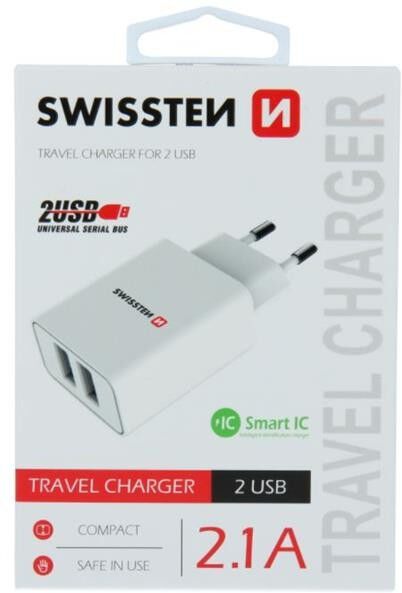
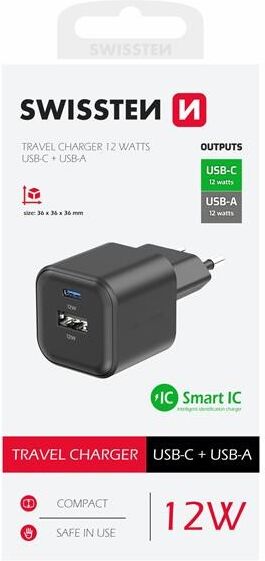
SWISSTEN 22071510 Charger Device, mobile communicationPlug Type: Schuko; Connectors/Plugs: USB type-C, USB; Charge Mode: GaN, PD; Overcharging protection: Yes; Overheating protection: Yes; Short Circuit Protection: Yes; Colour: black; Number of inlets/outlets: 2; Power [W]: 127,59 £*Shipping: 8,45 £Secure redirect to the provider
-
Sceptre Stop Reading the News: A Manifesto for a Happier, Calmer and Wiser Life by Rolf DobelliIn 2013 Rolf Dobelli stood in front of a roomful of journalists and proclaimed that he did not read the news. It caused a riot. Now the author of the bestselling The Art of Thinking Clearly finally sets down his philosophy in detail. And he practises what he preaches: he hasn't read the news for a decade. Stop Reading the News is Dobelli's manifesto about the dangers of the most toxic form of information - news. He shows the damage it does to our concentration and well-being, and how a misplaced sense of duty can misdirect our behaviour. Most importantly, he offers the reader the guidance on how to live without news, and the many potential gains to be had: less disruption, more time, less anxiety, more insights. In a world of increasing disruption and division, Stop Reading the News is a welcome voice of calm and wisdom.4,49 £*Shipping: 1,99 £Secure redirect to the provider
-
How do you distinguish a cation from an anion?
Cations are positively charged ions, while anions are negatively charged ions. Cations are formed when an atom loses one or more electrons, resulting in a net positive charge. Anions are formed when an atom gains one or more electrons, resulting in a net negative charge. One way to distinguish between cations and anions is to observe their behavior in a solution: cations are attracted to the negative electrode (cathode) in electrolysis, while anions are attracted to the positive electrode (anode). Additionally, cations are usually smaller in size than their parent atoms, while anions are larger. **
-
How is the reduction of the dichromate anion carried out?
The reduction of the dichromate anion is typically carried out using a reducing agent such as sulfur dioxide, iron(II) salts, or thiosulfate. These reducing agents donate electrons to the dichromate anion, causing it to be reduced to chromium(III) ions. The reaction is usually carried out in an acidic solution to provide the necessary conditions for the reduction to occur efficiently. **
-
How is the sodium cation connected to a chloride anion?
The sodium cation is connected to a chloride anion through ionic bonding. In this type of bonding, the sodium atom loses an electron to become a positively charged cation, while the chloride atom gains an electron to become a negatively charged anion. The opposite charges of the sodium cation and chloride anion attract each other, forming a strong bond between the two ions. This ionic bond creates a stable compound known as sodium chloride, or table salt. **
-
Why is there no KSO4 molecule? Why is it an anion?
There is no KSO4 molecule because potassium (K) is a metal and sulfate (SO4) is a polyatomic ion. When potassium combines with sulfate, it forms the ionic compound potassium sulfate (K2SO4), in which potassium loses an electron to become a positively charged ion (K+) and sulfate gains two electrons to become a negatively charged ion (SO4^2-). This ionic bond between the positively charged potassium ion and the negatively charged sulfate ion results in the formation of an anion rather than a molecule. **
* All prices are inclusive of VAT and, if applicable, plus shipping costs. The offer information is based on the details provided by the respective shop and is updated through automated processes. Real-time updates do not occur, so deviations can occur in individual cases. ** Note: Parts of this content were created by AI.